REUTERS/Wolfgang Rattay
Monitoring Islamophobia in Europe for 10 years: Some observations
We take March 15, the UN International Day to Combat Islamophobia, as an opportunity to reflect upon 10 years of publishing the yearly European Islamophobia Report, where more than 30 authors have published over 25 country reports covering the state and development of Islamophobia since 2015. While far from comprehensive, this reflection provides insights in the making of the report, the achievements, worsening trends, as well as a short outlook on the future.
The beginning
In 2014, before the war in Syria devastated the country and forced millions of people to flee, we decided to start a project covering the development of Islamophobia or anti-Muslim racism across Europe. Until then, academic literature was primarily occupied with Islamophobia in Western Europe, which is home to much larger Muslim populations compared to many European countries in the East, aside from those that have larger native Muslim populations. We could not have anticipated what would follow: a politicization of Islam by the governing powers across many Eastern European countries, especially the Visegrad Four, Hungary, Poland, Czechia, and Slovakia, regardless of which political party was in charge.
Why we started
The need for the project developed out of the necessity to confront the Europe-wide skepticism regarding Islamophobia as a real issue. Wherever we had given talks and were invited, Muslim civil society was complaining that their flagging of the problem of anti-Muslim racism was simply ignored. From the local to the European level, they were confronted with the usual response: where is the evidence? In response, we decided to produce the evidence by bringing together experts from the countries we wanted to cover.
Back in those early years, the very notion of Islamophobia or anti-Muslim racism was highly contested. Media pundits had regularly published pieces to downplay the phenomenon or even challenged the very notions themselves, even entertaining conspiracy theories about the invention of the term Islamophobia by Islamic clerics in Muslim states.
After ten years, the denial of Islamophobia in the highest echelons of power remains a serious problem. Without the political recognition of the problem there can be no real solution and improvement. Practically, Islamophobia—also referred to as anti-Muslim racism—continues to be widely unrecognized, and its very existence is frequently denied by numerous European governments, political parties, institutions, journalists, and intellectuals. Various strategies are used to deny or minimize Islamophobia. Some actors reject the concept entirely, claiming that it does not exist, while others attempt to downplay its scale or seriousness. Prominent Islamophobic figures and networks often resort to conspiracy narratives, arguing that Islamophobia is merely a fabricated concept allegedly promoted by “Islamists” in order to silence legitimate criticism of Islam and Muslims. Another common strategy is the avoidance of the terminology itself, thereby refusing to acknowledge or legitimize the debate on Islamophobia. In place of terms such as “Islamophobia” or “anti-Muslim racism,” softer expressions like “anti-Muslim sentiment” or “prejudice” are frequently used, which tend to obscure the structural and institutional dimensions of racism embedded in Islamophobia beyond the level of individual attitudes or interpersonal bias.
Early allies
At the same time, there have been people who understood the issue, and who were aware of the concern and argument we had presented early on: anti-Muslim racism will hurt everybody, as it doesn’t only challenge Muslims’ religious freedom, but also their civil liberties. This will eventually boomerang back to other marginalized communities, and ultimately lead to an erosion of democratic rights. In other words: what happens to Muslims today, can potentially happen to anybody tomorrow.
What changed to the better
We presented our work in different fora: some of them addressing the policy makers, including the European Parliament, the Council of Europe, the Organization of Security and Cooperation in Europe, the Organization of Islamic Conferences, the United Nations, and national parliaments throughout Europe. Others were grassroots-oriented, sharing our findings with those anti-racist and/or Muslim civil society organizations that are dedicated to the struggle against Islamophobia.
Throughout the past 10 years, we witnessed how some European countries slowly implemented changes. For example, Germany adopted anti-Muslim hate crime as a separate category in their hate crime statistics, which increased the visibility of anti-Muslim hate crimes within state institutions. Another example was the establishment of an EU-wide coordinator on combating anti-Muslim hatred, who would be formally in charge of addressing the problem at an EU-level. However, it’s important to highlight that this position has not been given adequate financial and human resources needed to tackle the issue. In 2020, the Council of Europe also appointed a special representative on antisemitic and anti-Muslim hate crimes. In 2022, the UN declared March 15th as the International Day to Combat Islamophobia, which we consider a milestone in the recognition of Islamophobia and the necessity to counteract it. Finally, in 2023, the UN General Assembly adopted a resolution requesting the UN Secretary General to appoint a special envoy to combat Islamophobia.
While all these improvements were far from perfect in their conceptualization and implementation, they still made the point that the problem was undeniable and required urgent action. Importantly, it also increased the visibility of the issue. On a civil society level, the number of activities and long-term projects as well as the establishment of new associations dedicated to the preventive and active struggle against Islamophobia increased: from associations improving the monitoring of anti-Muslim hate crime data on a national level, to groups creating safe spaces to tackle epistemic racism within their own communities, to allying themselves along the intersectional struggle of Islamophobia with other marginalized communities. While gaps remain and there are still opportunities for creating greater awareness, the landscape has shifted profoundly since 2015.
Persistent challenges
At the same time, a worrying trend is emerging involving top-down politics influencing social outcomes. Several European countries have made the institutionalization of Islamophobia a key feature of their politics. Both the French and Austrian states have become pioneers in the criminalization of work against Islamophobia itself. They have shut down Islamophobia watchdog associations by using terrorism legislation to crack down on an independent Muslim agency that was challenging the state-led criminalization of the latter. To circumvent any critique for their human rights violations, these governments reframed their attack on free speech and the freedom of association by claiming to be fighting against political Islam. The infamous ghetto laws in Denmark are another example of the racialized disenfranchisement of a Muslim population that makes Muslims de facto second-class citizens.
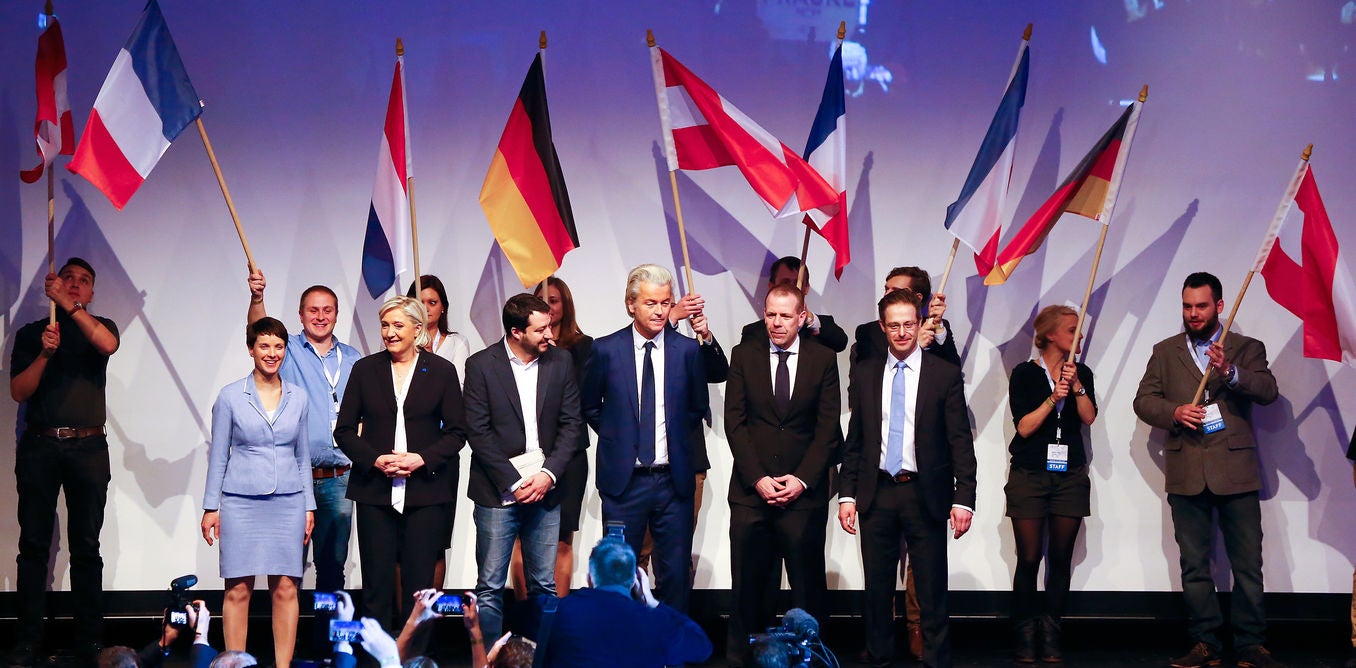
Even though all European countries have supported the UN resolution to have March 15 as the International Day to Combat Islamophobia, our monitoring reveals that governments, state representatives, and even political parties do not even pay lip service to that day on a domestic level, with an absolute majority of countries simply ignoring its very existence. Norway is the only country to offer a National Strategy against Islamophobia, and most EU member states have not included anti-Muslim racism in their national strategies against racism. Simultaneously, the organized far-right has normalized blatant Islamophobia in the public sphere with the emergence of new parties and the overall success of far-right parties across the continent.
What we have observed in the last ten years can also be verified by other European-wide surveys. In this context, the European Union Agency for Fundamental Rights (FRA) report from 2024 is very telling. FRA’s report titled “Being Muslim in the EU – Experiences of Muslims” confirms a worsening situation for Muslims across many EU countries. According to the findings, overall exposure of Muslims in Europe to racial discrimination has risen sharply, with nearly half of respondents (47%) reporting experiences of discrimination in the past five years, up from 39% in 2016, and over a third (35%) in the past year, compared to 25% earlier. Discrimination is particularly acute in the labor and housing markets: almost two in five Muslims (39%) encountered racial bias when seeking employment, a significant increase from 31% in 2016.
Young Muslims born in Europe face even higher risks, especially women who wear religious clothing. Among those aged 16–24, 58% of women wearing such clothing reported discrimination in the job market, compared to 38% of their peers who do not. At the same time, there has been no improvement regarding racist harassment and violence, with 27% experiencing harassment and 4% a physical attack—figures unchanged since 2016. Another alarming trend is the rise in perceptions of discriminatory police profiling: almost half (49%) of those stopped by the police in the year before the survey believed it was due to their ethnic or immigrant background, up from 42% in 2016. Despite these increases, reporting levels remain very low. While most incidents still go unreported, there has been a modest rise in reporting racist attacks to the authorities, from 23% in 2016 to 30% in 2022. The numbers were especially high in Austria, Germany, and Finland. The data indicate that racism is increasingly evident in structural domains, especially employment and housing, where discriminatory practices against Muslims have become more pronounced compared to the previous survey period.
Where to go from here
This snapshot reveals that Islamophobia does not follow a linear trajectory. Progress, however incremental, has been made. At the same time, the scale of what remains feels daunting, especially given the institutional and structural issues that remain the greatest barriers. The reluctance of those in power to act remains a central obstacle, but pressure from below is mounting. Organized efforts to call attention to and counter Islamophobia are increasingly visible in an environment of growing authoritarian and anti-democratic developments. This has laid bare how anti-Muslim racism is deeply intertwined with broader assaults on civil liberties, from free speech to religious freedom to the freedom of association. As austerity deepens and attacks on anti-authoritarian movements intensify, they will only become harder to ignore.
Monitoring these developments by providing insights from local experts of these countries will remain a key dimension to sustain and strengthen this work. The European Islamophobia Report will continue.
Authors:
Enes Bayrakli is Professor of Political Science and International Relations at the Turkish-German University in Istanbul, Türkiye.
Farid Hafez is Associate Teaching Professor of International Relations at William and Mary in Virginia, USA, and senior researcher at Georgetown University’s The Bridge Initiative in Washington D.C.
Both serve as the founding editors of the annual European Islamophobia Report that is available online for free: www.islamophobiareport.com/en